Time Report
A Time Report freezes matching entries from a date range into a document. A client copy on any plan, a fuller internal copy on Pro, then download the PDF.
Create a Time Report
A Time Report turns tracked entries from a date range into a saved document. Write it for a client, or use the Pro Internal version for a more detailed copy for yourself.
- On Time, set the date range and filters you
need. Open Export and choose Time report.
The composer carries the date range, selected projects, task-name filter and Group by choice from that view.
- You can also start from Reports. Press New report, choose Time report, then set the range and projects yourself.
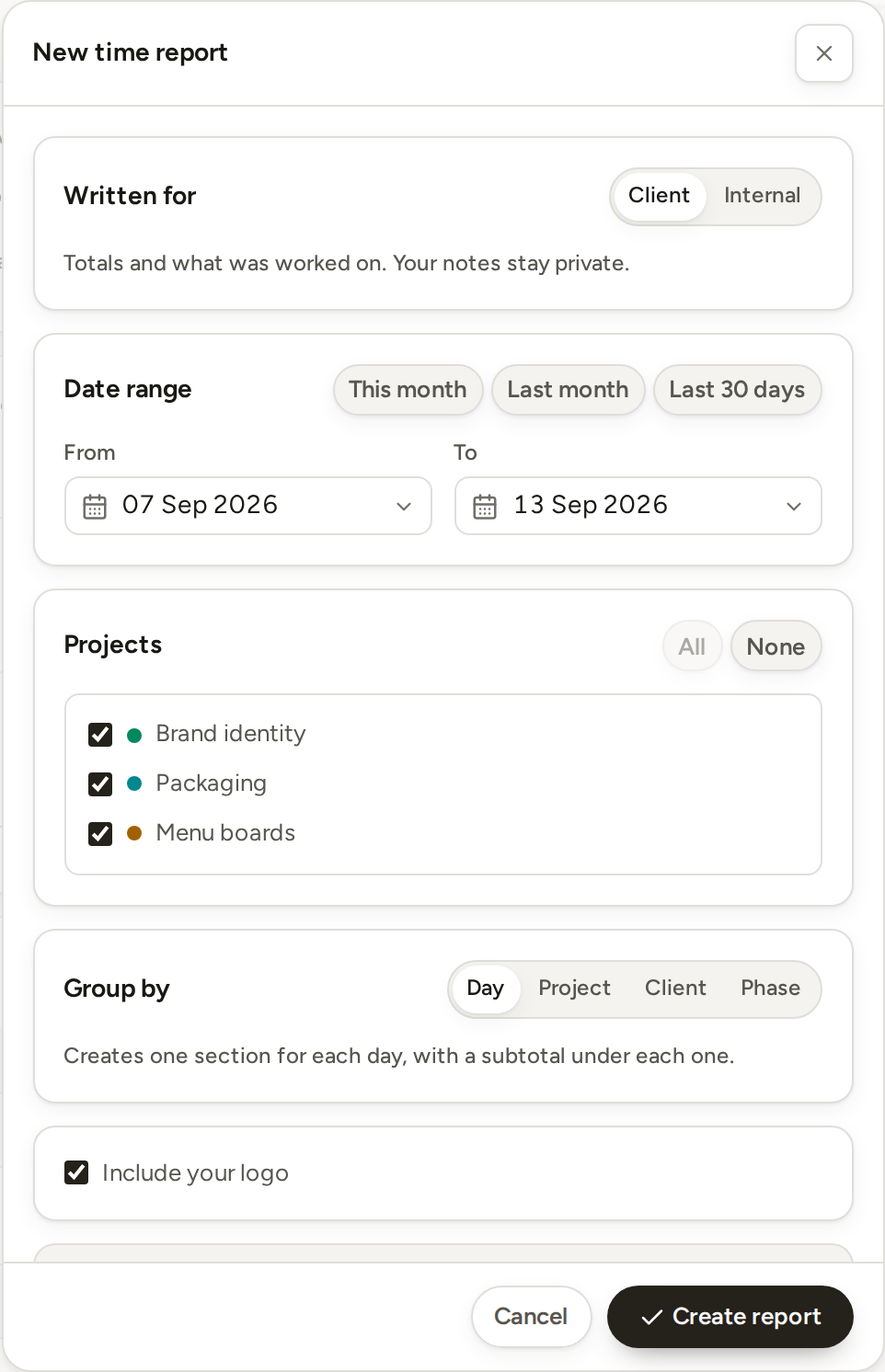
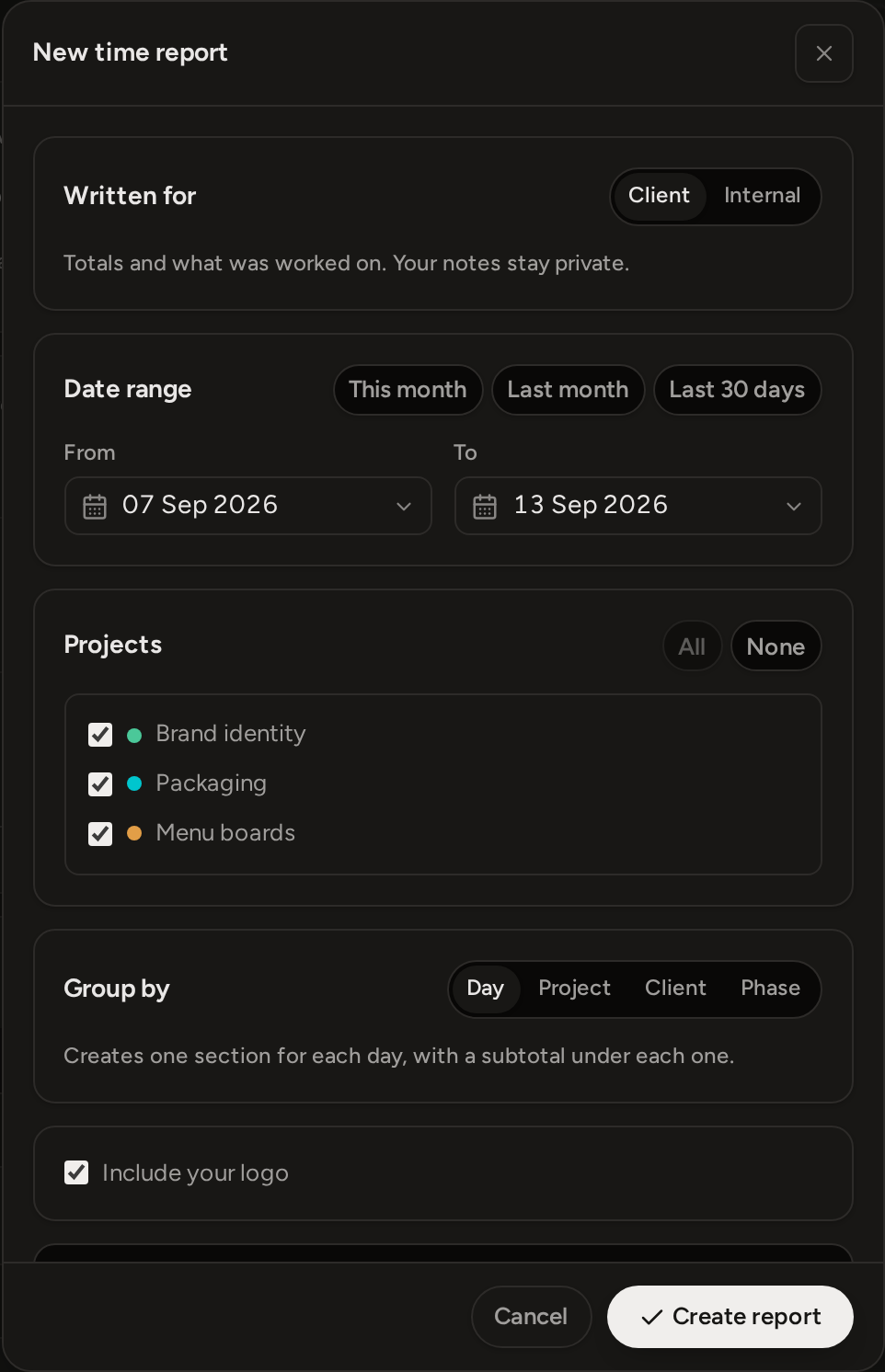
- Choose who it is Written for: Client or Internal.
- Pick the dates with the From / To pickers, or a shortcut: This month, Last month or Last 30 days.
- Tick the active projects to include, then choose Group by: Day, Project, Client or Phase.
- Press Create report.
When you start from Time, Phased also starts the PDF export. The saved report remains available under Time reports in Reports.
- New Time Reports can select active projects only. Time from an archived project may still appear on the Time page, but that project is not offered in the report composer.
- A client report cannot contain work for more than one named client. Narrow the selection to one client, or use an Internal report. Projects without a client do not count towards this limit.
- For a client report, the initial selection leaves out internal projects. Pressing All selects every active project, including internal projects, so review the checklist before creating the document.
- A Phase or Scope filter from Time does not carry into the report. The report covers whole phases and both scopes for the selected projects and task names. The composer calls this out before creation.
- Create report stays unavailable until the range is valid, at least one project is selected and matching tracked time exists. Stop any matching running timer first.
The report freezes dates and grouping in the timezone of the browser or device where you create it.
What it shows and what it hides
A client report lists tracked time, the number of entries and a line for every entry, grouped as you chose. On Pro it also shows value where that value is a client cost. It never prints your notes.
An Internal report adds days worked, averages per day and per entry, Additional Work, unpriced time and your note beside each entry.
- "Additional Work" on the report is the same time you marked Out of scope in the app.
- A client copy prices only work whose rate is the client's cost. That is an hourly phase with no budget, or Additional Work. A budgeted phase's internal rate stays out of the client copy.
- The selected entries, project and task names, times, scope marks, resolved rates, currency, grouping and totals freeze when the report is created. Later time or renamed work does not change those facts.
What can still change
Open the report's row menu in Reports and choose Edit to change its presentation. The frozen work and figures stay in place.
- Switching a client report to Internal needs Pro.
- An Internal report that contains more than one named client's work cannot be switched to Client.
- Your current studio identity, logo, number and date formats, plan branding and audience choice affect a new render of an older report. They do not recalculate its saved entries or amounts.