Out of scope
Mark an entry Out of scope when the work was outside the agreement. It leaves the phase budget and is priced as Additional Work on reports. Never automatic.
Every entry starts in scope and counts against its phase's budget. When the client asks for something outside the agreement, mark those entries Out of scope. They stay in your records, stop using the original budget, and are added to the agreed price as Additional Work on a Phase or Project Report.
Mark an entry Out of scope
The scope control is the last chip in the entry editor, after the task and the note switch. It shows the currency sign, and once the entry is marked the chip wears a + badge, and so does the block on the calendar.
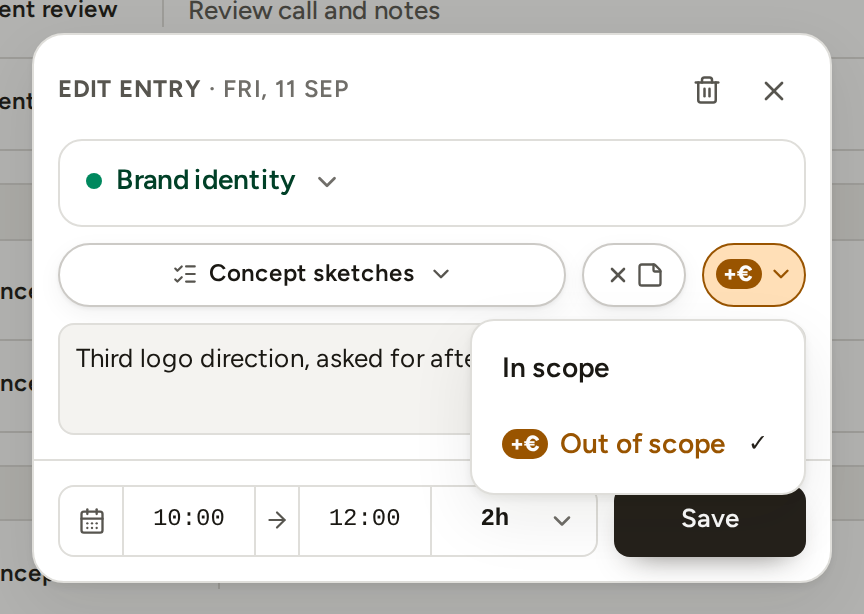
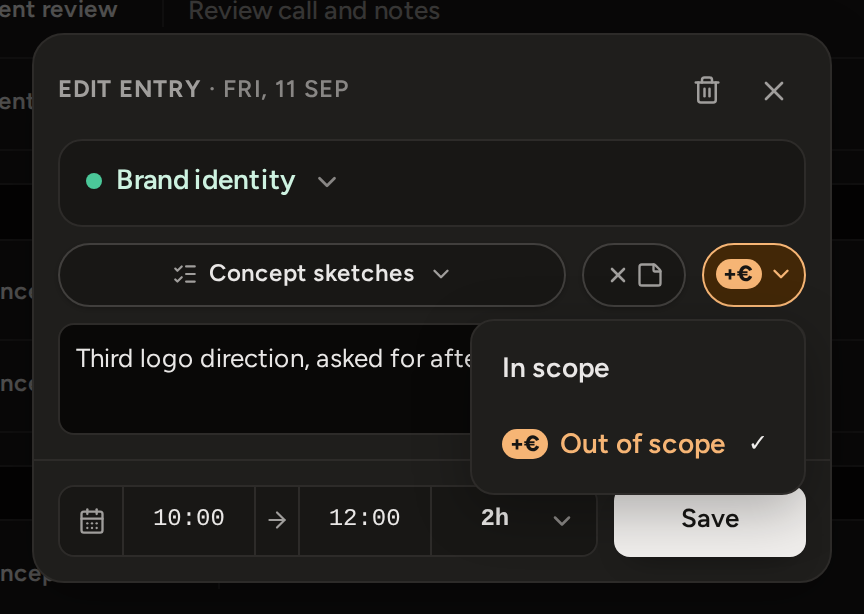
- Open the entry and press the scope control at the end of the chip row.
- Choose Out of scope.
- Press Save.
- You can mark an entry while creating it, in the same panel.
- In the calendar's List view, each row carries Mark as out of scope. Select several rows and the bar above the list marks them all at once.
- A task can name both in-scope and out-of-scope hours. Scope belongs to the entry, so the same task can appear under Original Work and under Additional Work on one report.
When the control is offered
Out of scope means work beyond an agreed budget, so the control is live only where there is a budget to be beyond.
- The phase needs a budget in money or hours. Without one the control is greyed and says Give the phase a budget first. Out-of-scope work is work beyond it. Set one under Phases, budgets, rates.
- A project switched to Internal project has no scope control at all. Internal work earns no client money and never appears in client reports.
Switch it back
Open the entry, press the scope control and choose In scope. An entry already marked can always be switched back, even when the phase's budget was removed in the meantime. In the List view the row's pill reads Out of scope while marked, and pressing it switches the entry back.