Time entry
One entry is a stretch of time on a project, with an optional phase, task and note. Open it to change any of those, move it to another day, or delete it.
Every entry has a project, a start and an end. A phase, a task, a note and a scope mark are optional. Select a block on the calendar, or in the calendar's List view open a row's Entry actions menu and choose Edit. The same editor opens either way.
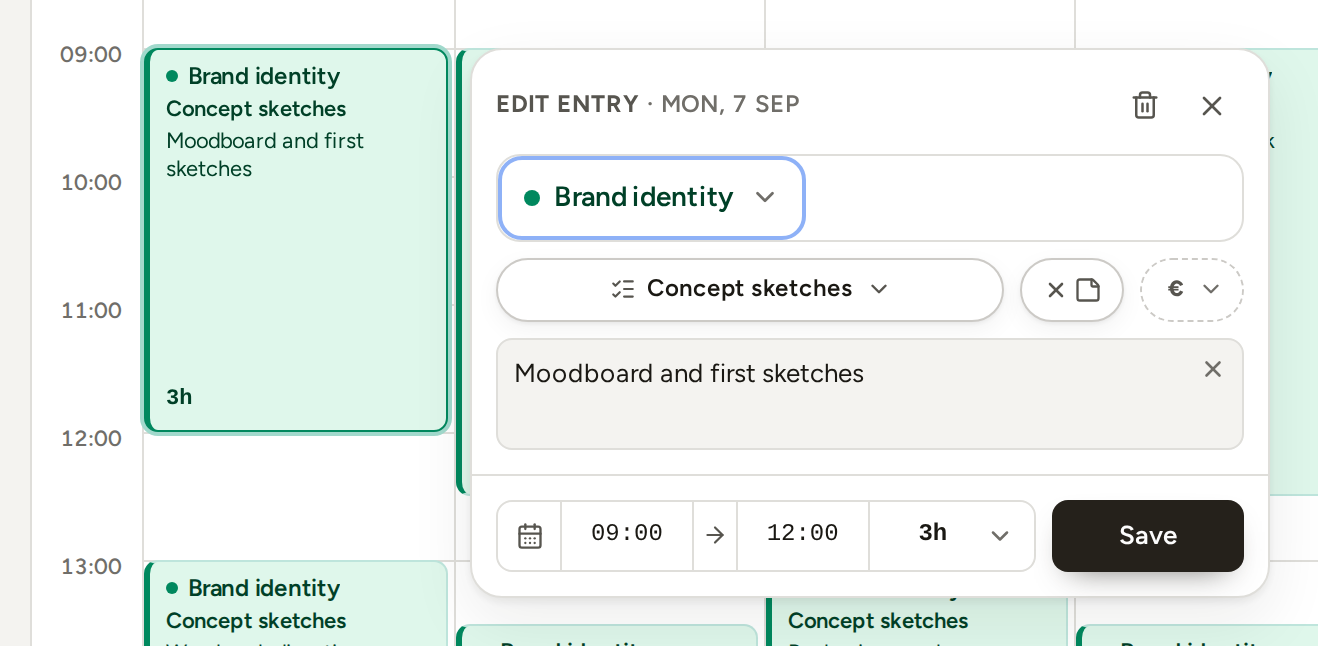
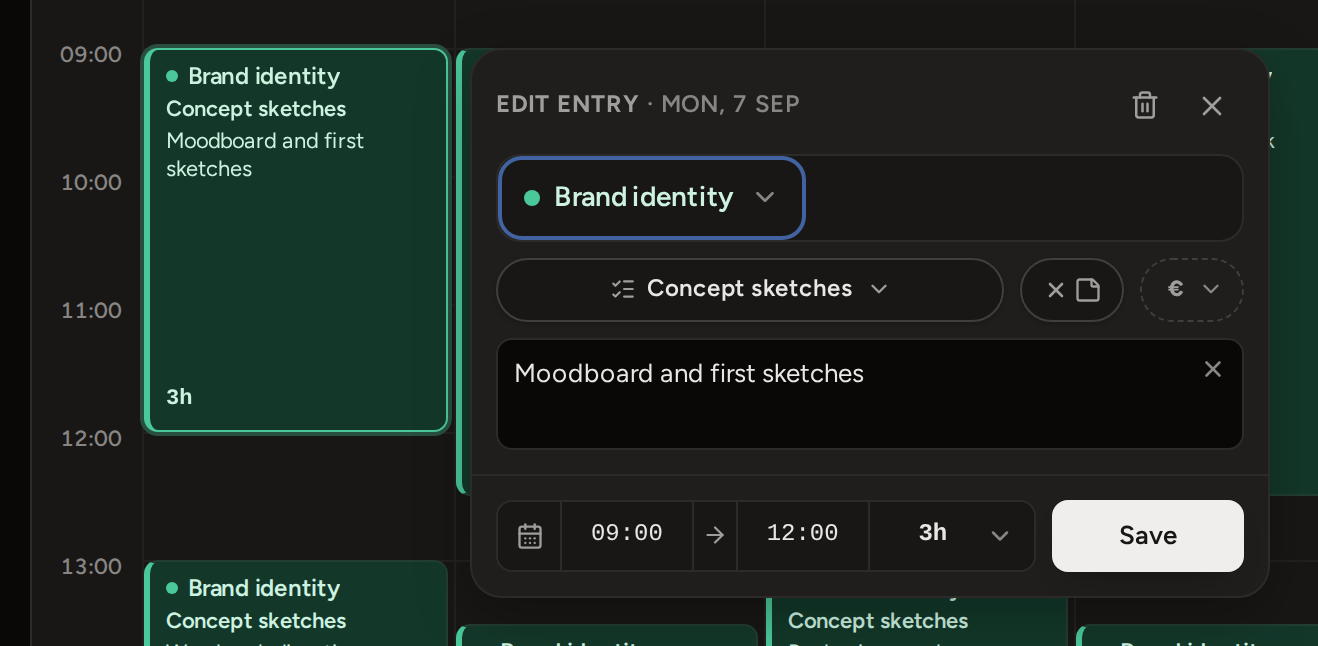
From the top: the project and, on a phased project, its phase. Then the task, the note switch and the scope control. Then the note itself. The footer holds the day, the start and end times, the duration and Save. Nothing changes until you press Save. Close or Esc drops your changes and leaves the entry as it was, and a click outside the editor closes it only while nothing has changed.
Project
The project is the first control. Open it to move the entry to another project.
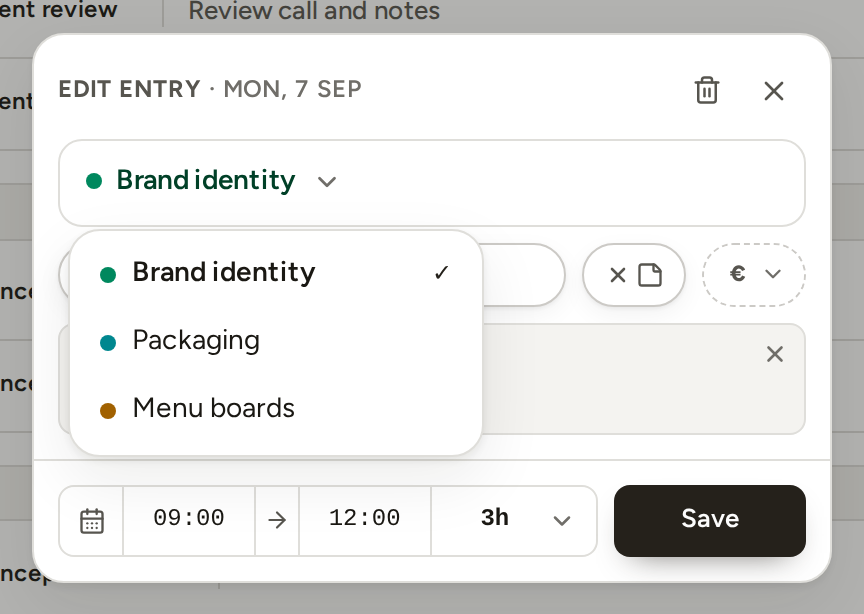
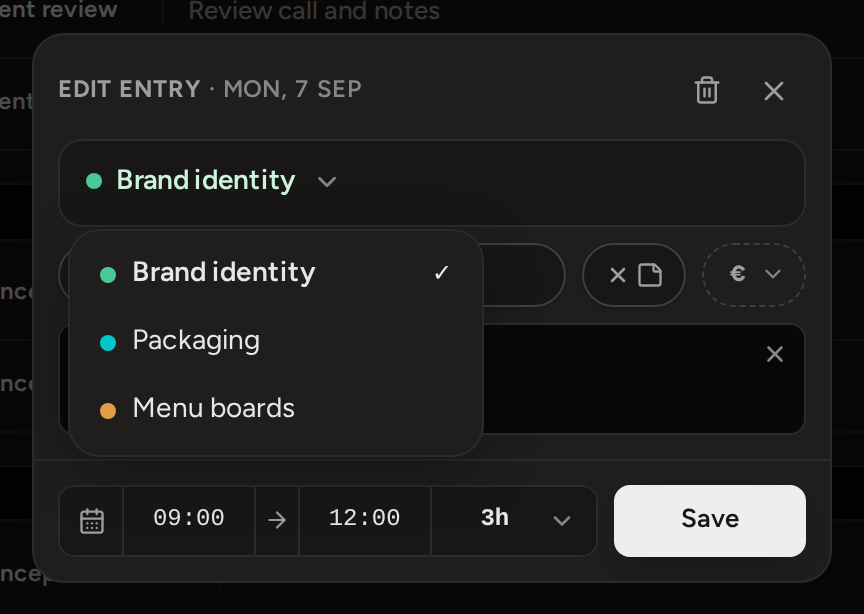
- With more than six active projects, the list gets a search field at the top.
- Moving an entry to a phased project lands it on the phase you last used there, or on its first phase.
- The task is cleared when the project changes, because a task belongs to one phase of one project. Pick one again from the new project's list.
Phase
On a phased project the phase sits beside the project. Open it to move the entry to another phase of the same project.
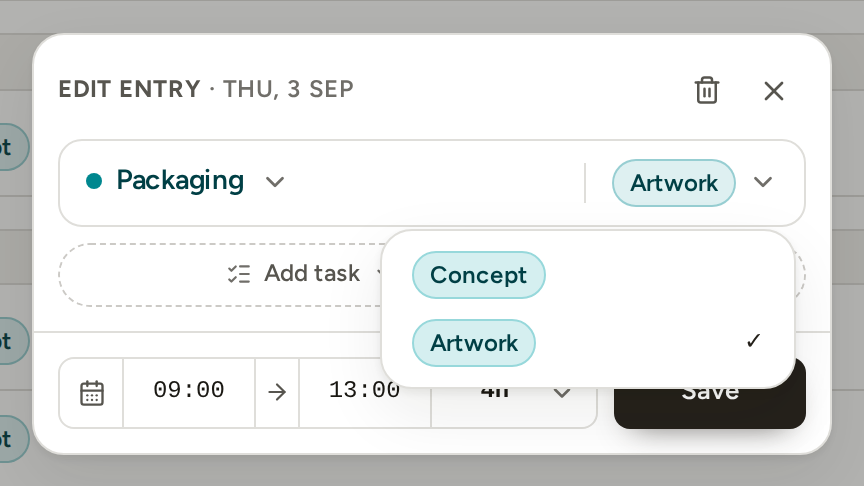
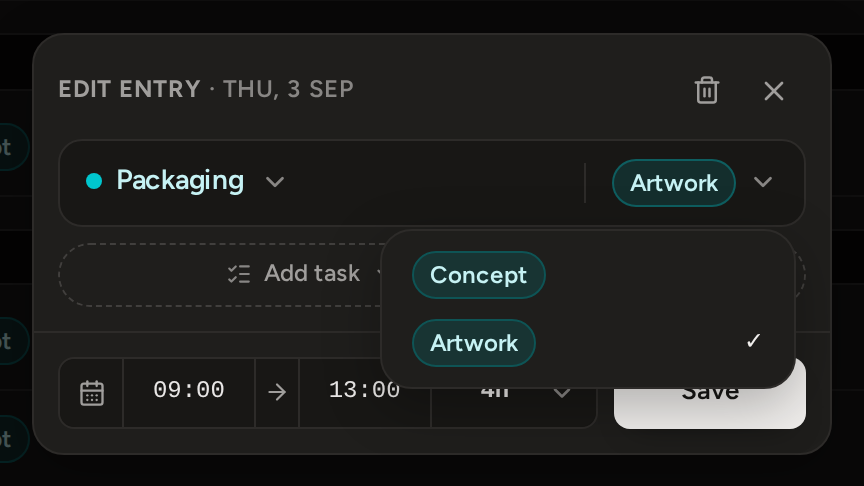
- A simple project shows no phase control. Its one phase is hidden and every entry attaches there on its own.
- Changing the phase clears the task, for the same reason as changing the project.
Task
A task names the kind of work. It is optional, and one task can name many entries. Open the task control to choose from the suggestions or to type a new name.
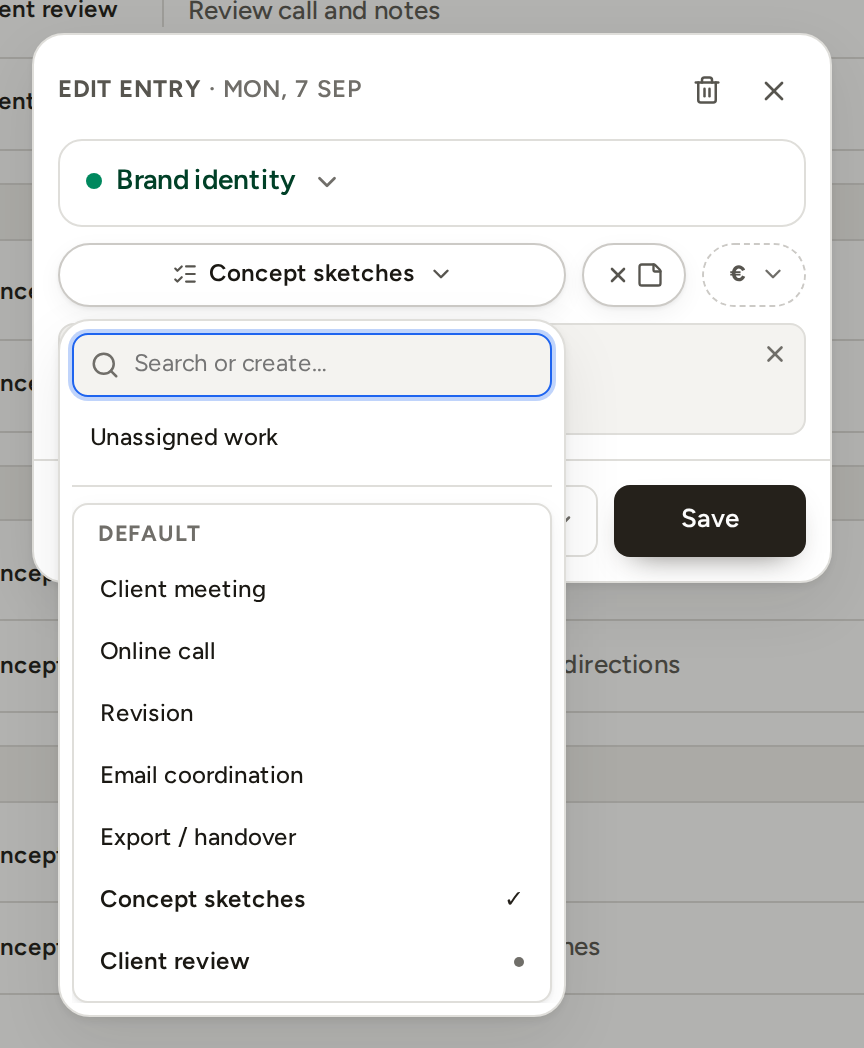
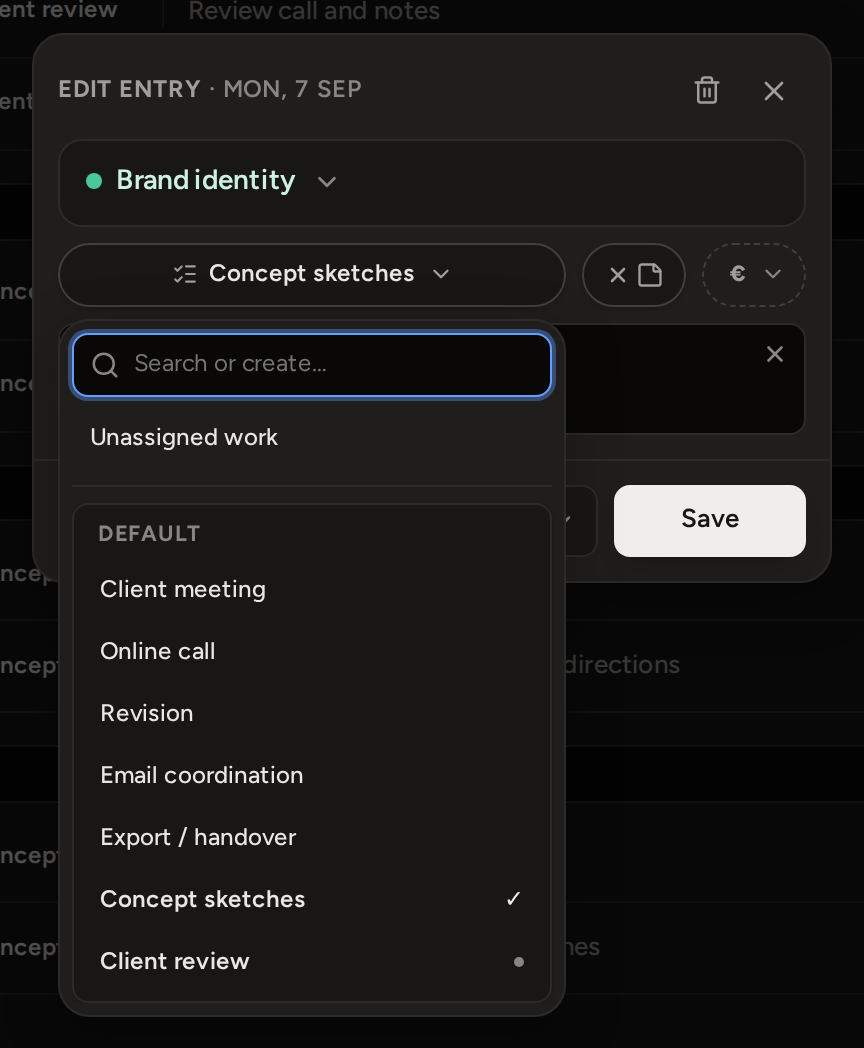
- Choose a name from the list. Unassigned work at the top removes the task from the entry.
- To add a name that is not offered, type it and press the + Create row under the list, or press Enter.
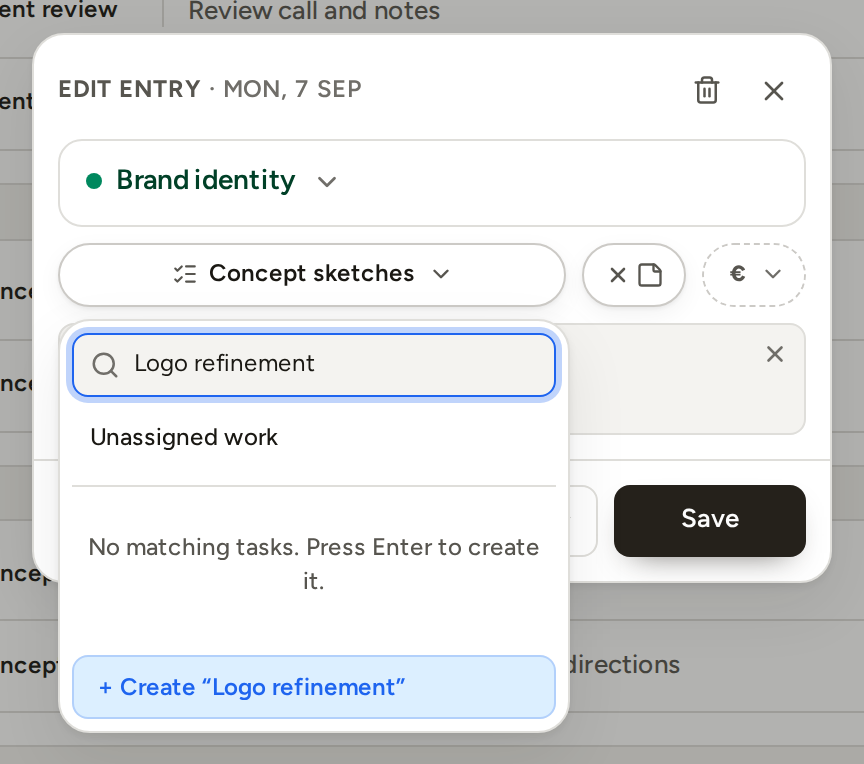
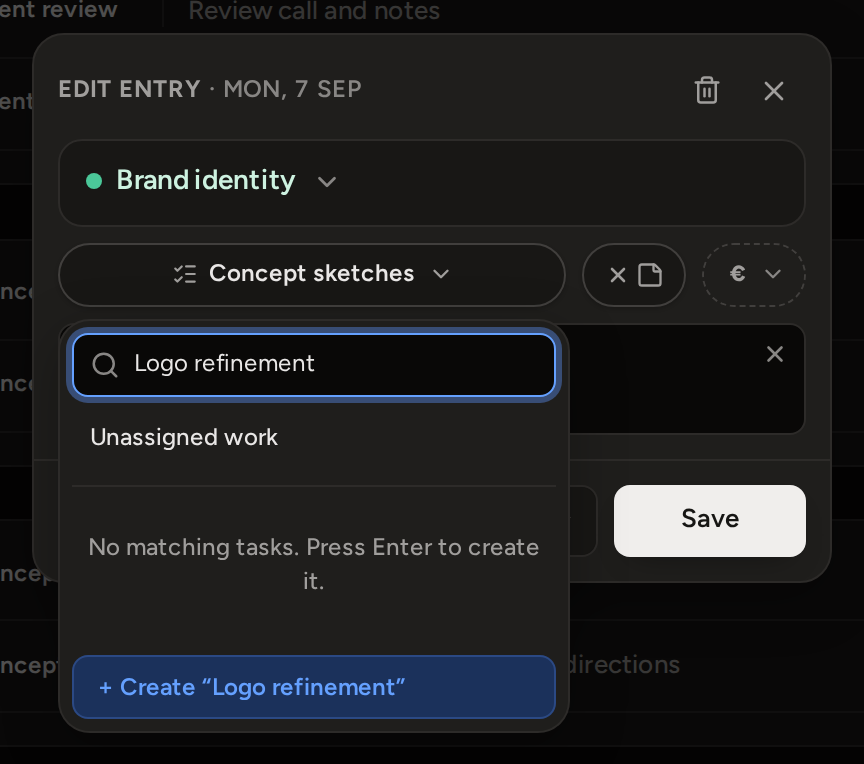
- A name you create here becomes a task on this phase and is added to your Default task group, so it is offered again on every phase.
- A dot after a name means the task already has time on this phase. Typing filters the list, and a name that only matches in another group moves you to that group's tab.
- The groups on offer and their tabs are set up on the Tasks page and in the project's settings.
Note
A note holds your own detail about this one entry. It shows on the calendar block and in an internal Time Report, never in a client document.
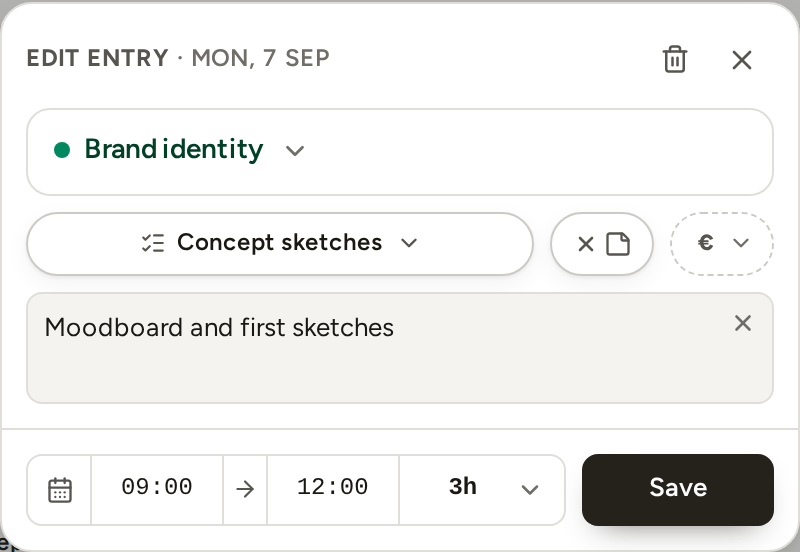
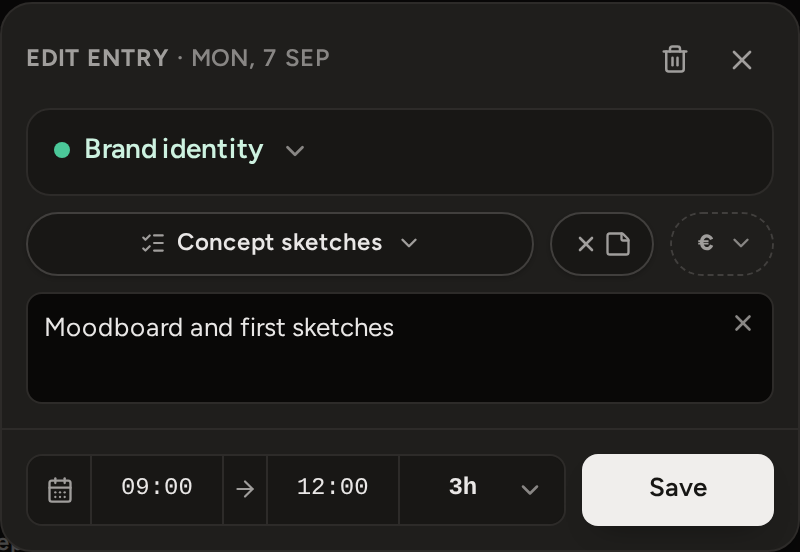
- Press the note switch after the task, labelled Add note, and type in the field that opens.
- Press Save.
- Clear note, the cross inside the field, empties the text and keeps the field open.
- The switch itself now reads Remove note and takes the note off the entry. It then reads Restore note until you close the editor, and pressing it brings the text back.
- Closing the editor without saving leaves the stored note as it was.
Day and time
The footer says when the entry happened and how long it lasted. From the left: the day, the start time, the end time and the duration.
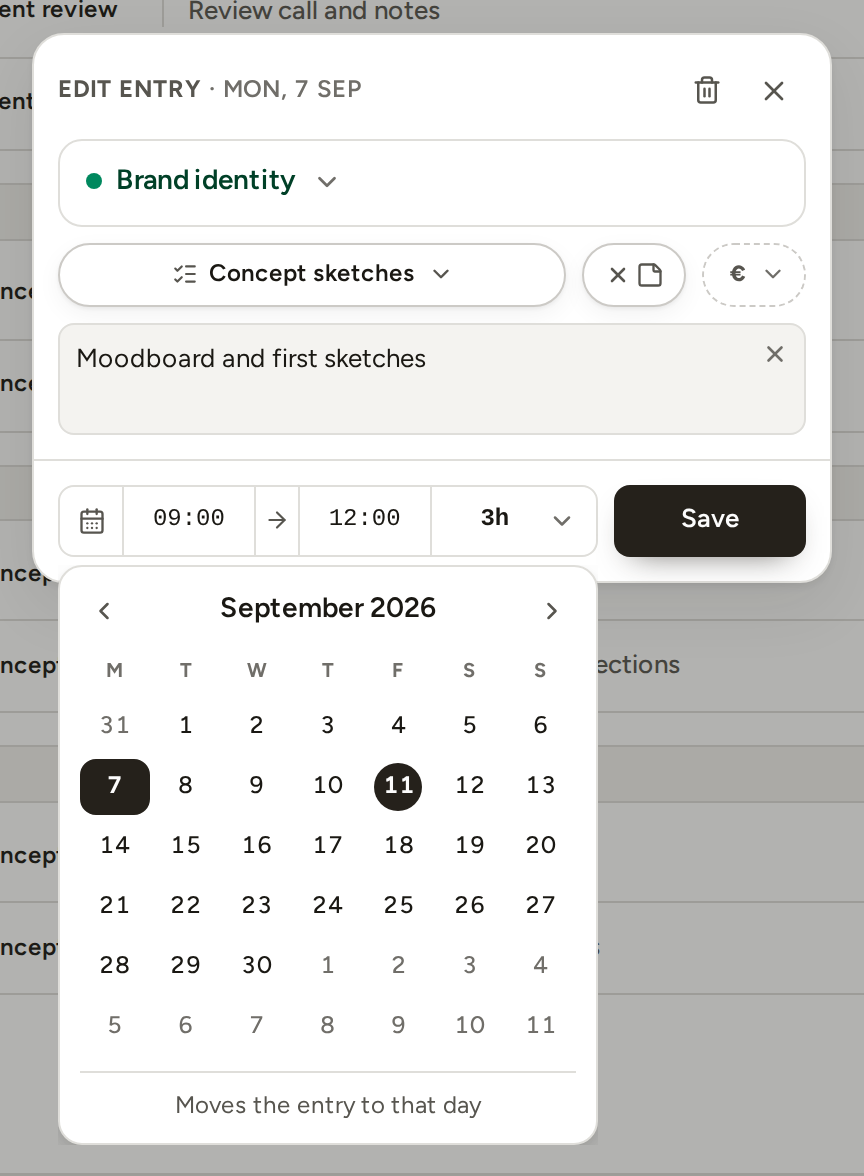
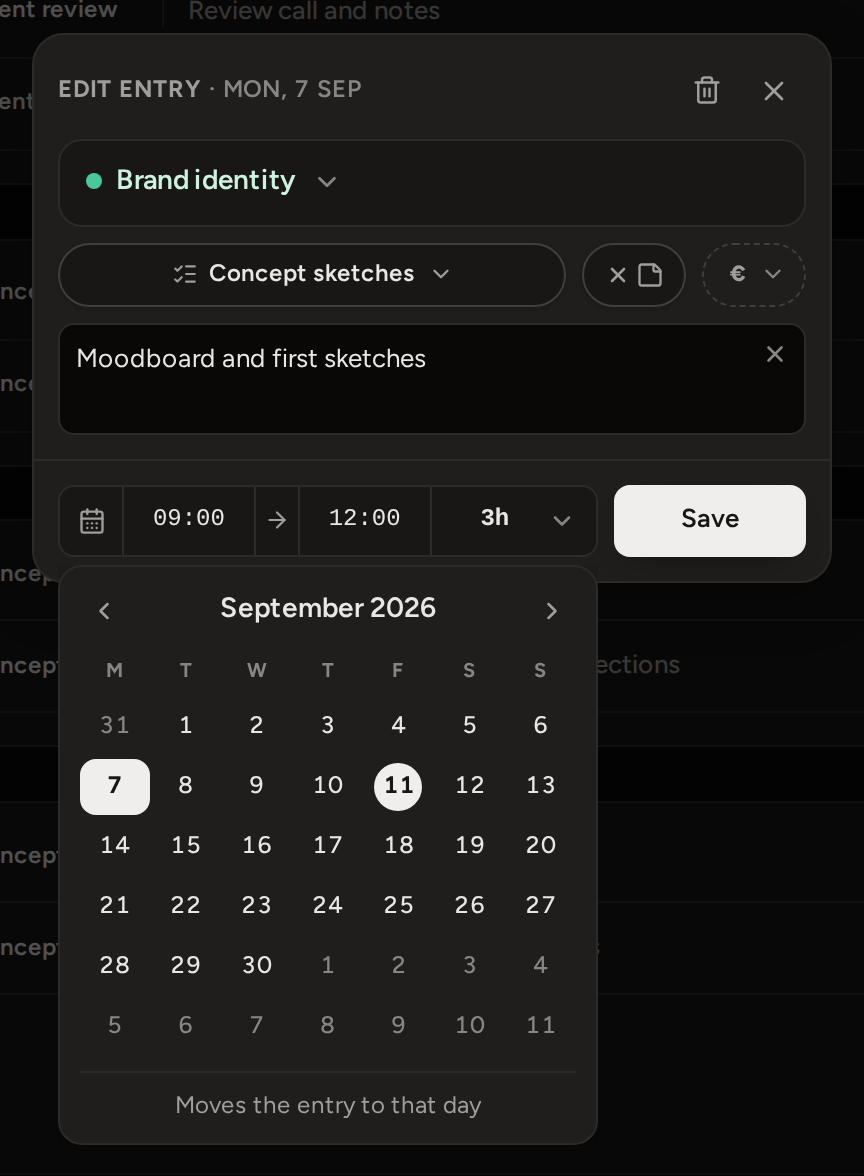
- Press the calendar icon, Change day, and choose a day. The entry keeps its times and moves to that day.
- Press Start time or End time to open the time picker: an hour wheel, a minute wheel in five-minute steps, and the four quarter hours of the chosen hour as one-press shortcuts. Every pick applies at once, and Done closes the picker. To type a time, press the centred number of a wheel and type over it.
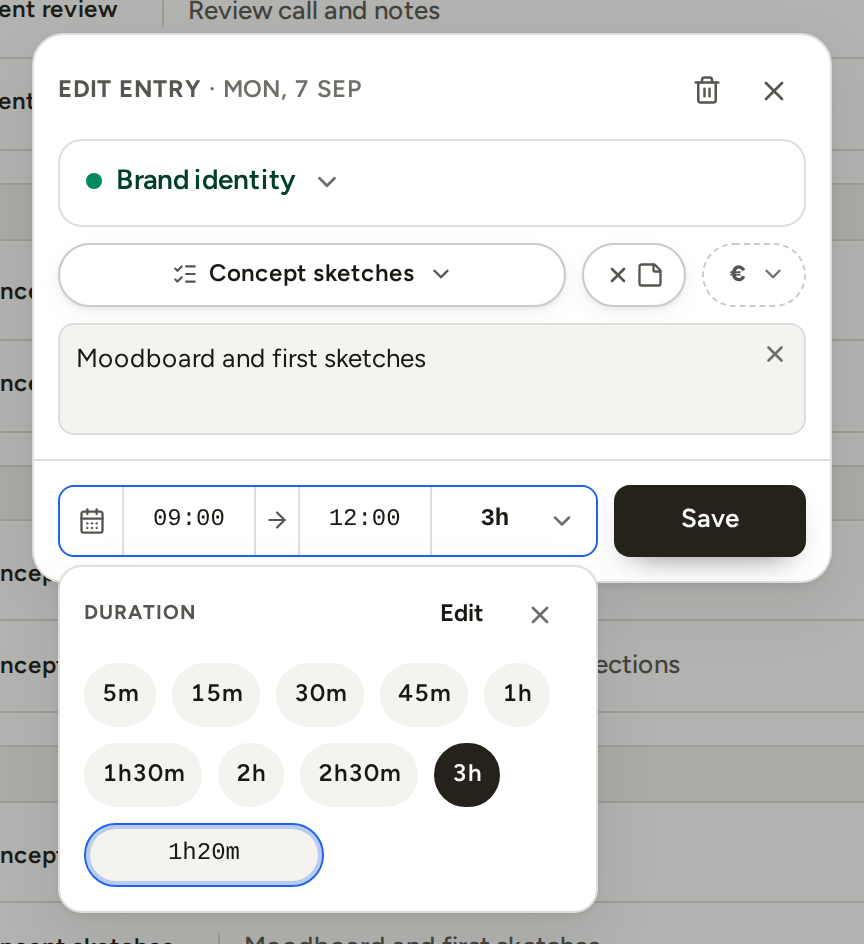
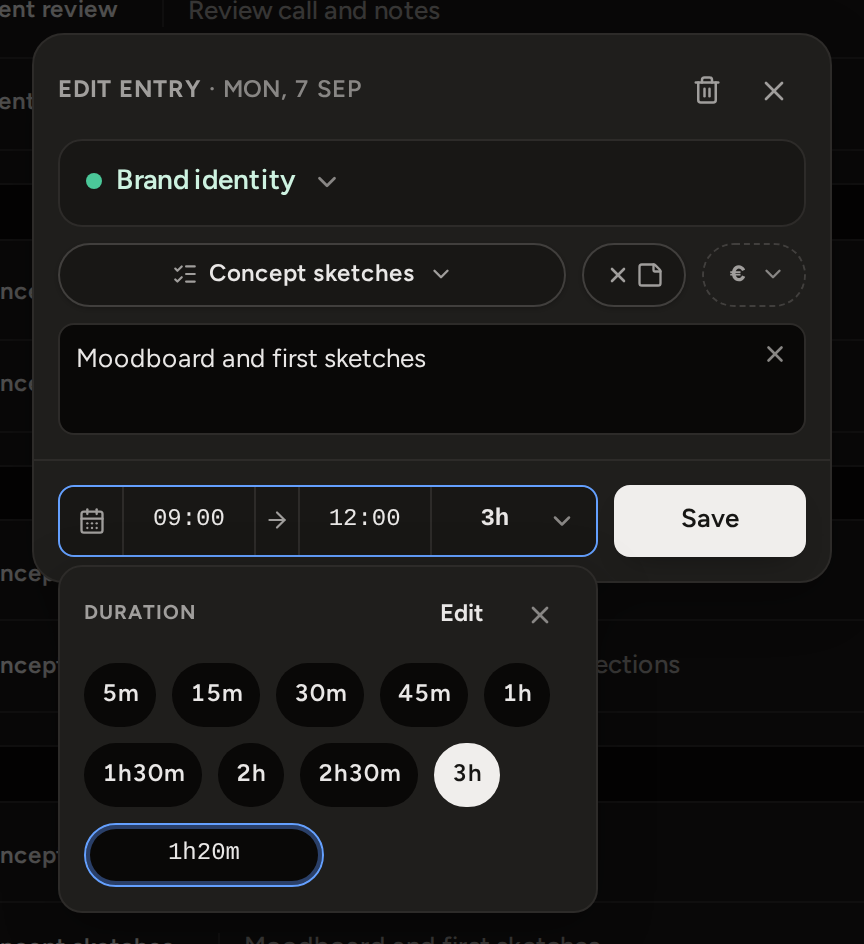
- Press Duration to choose a saved length. Picking a duration keeps the start and moves the end.
- Press Save.
The duration panel is a set of quick picks you own. Press + and type a length, such as 1h20m or 80, then Enter: it applies to the entry and stays in the list.
- With a time field focused, ↑ and ↓ step it by 15 minutes, or by an hour with Shift.
- Edit in the panel's head puts a cross on every pick so you can remove one, and Reset to defaults appears once the list differs from the starting set. The list is kept on this browser.
- Dragging on the calendar snaps to 15 minutes. A typed time can land on any minute, and an entry can be as short as one minute.
Delete an entry
Press the bin in the editor's header, Delete entry. The entry disappears and the message Entry deleted offers Undo for ten seconds.
- If the entry's phase is already Reported or Paid, Phased asks Delete time from a reported phase? first. The saved report does not change, but the project's current totals will.
- In the calendar's List view, a row's Entry actions menu has the same Delete, and selecting several rows deletes them together after a confirmation.
- A running timer cannot be edited. Stop it first. More on what can be deleted is under Archiving and deleting.